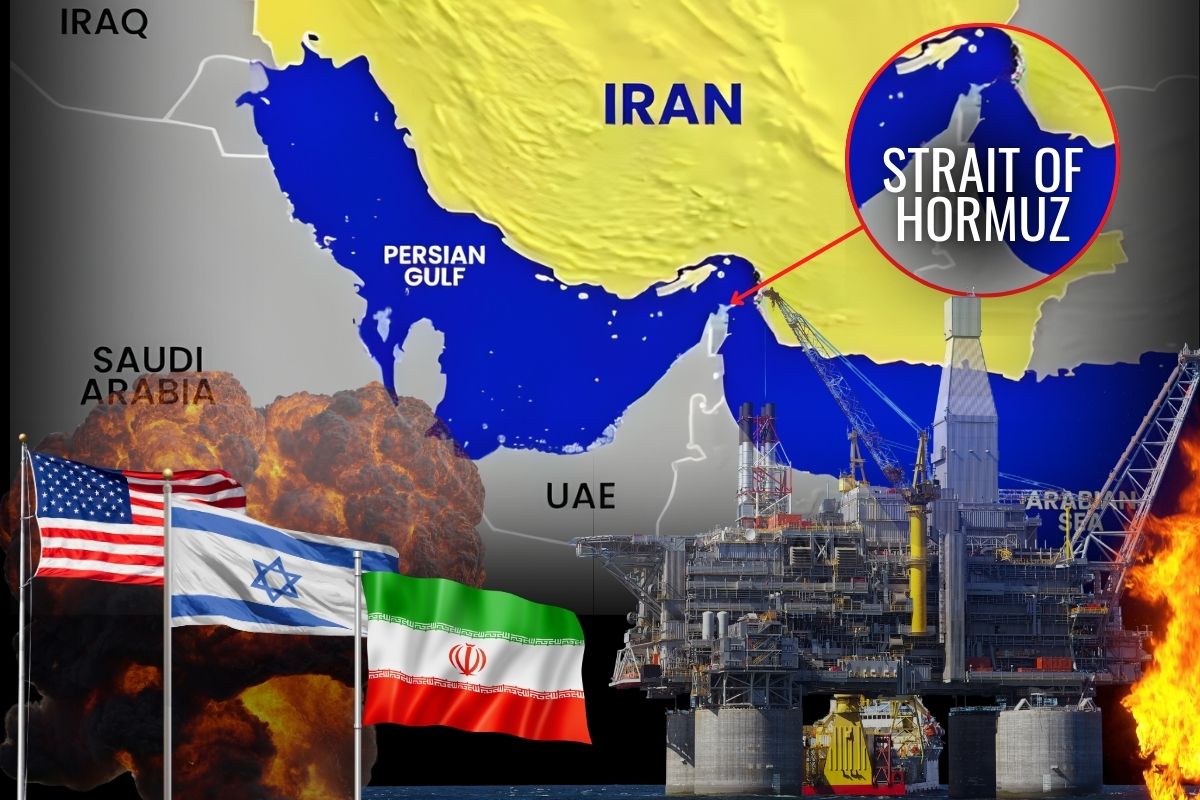
As of March 5, 2026, the Strait of Hormuz is effectively under a “risk blockade.” Following the US-Israeli strikes on Iran, insurance firms have pulled cover for tankers, causing a massive backlog. The delay has pushed Brent crude toward $82 and sent UK wholesale gas prices up by 40%. For those of us in the UK, it means petrol could hit 150p soon and inflation might jump by nearly 1%, likely killing off any hope of an interest rate cut this month.
Strait of Hormuz
I was staring at a cup of coffee that had turned cold when the news came on Tuesday morning. You know that feeling when you really can tell things are going to get expensive? That’s precisely how the market felt on March 3, 2026. This isn’t some abstract row in the desert.
We’re talking about a narrow strip of water—the Strait of Hormuz—that functions as the windpipe for the global economy. And right now, somebody’s got a death grip around it.
To be honest, it’s kind of frightening how dependent we are on this one narrow gap. If the Strait of Hormuz actually closed, the lights wouldn’t just flicker in the Middle East; they’d go out here. We’re talking about 20% of the world’s oil and a huge chunk of the gas that heats our semi-detached houses in the UK. One wrong move with a drone or a sea mine and the whole system shudders.
Also read: Who Is Nancy Guthrie? The Story Behind the Search That Halted Savannah Guthrie’s World
Why This Chokepoint Is A Total Nightmare
Look, if you’ve never seen a map of this place, it’s basically a massive bottleneck. At its narrowest, it’s just 21 miles across. That seems like a lot until you realise the actual shipping lanes are only about two miles wide. It’s like trying to shoehorn a fleet of lorries through a garden gate.
The ironic thing is that Iran doesn’t even have to sink a ship to win. They just need to make it too scary for the insurance companies. And that’s exactly what happened this week. Once those “War Risk” premiums went through the roof, the tankers stopped moving. More than 150 of them are just sitting there now, bobbing about, while we wait to see who blinks first.
The Gas Problem Is The Real Kicker
Everyone’s obsessed with the price of oil, and yeah, seeing Brent crude jump to $82 is a proper headache. But for those of us in Britain, the gas is the real worry. We get a massive amount of our Liquefied Natural Gas (LNG) from Qatar. Those ships have to pass through that strait. No passage? No gas.
Yesterday, the wholesale price in Europe shot up by 40%. Forty per cent. In one day. My mate who works in the City said it’s the worst vibe he’s seen since the 2022 energy crisis. If this matter doesn’t settle, your energy bill is going to stay high for a lot longer than the government promised. According to the latest reports on the cost of living and the Iran crisis, we are looking at a serious hit to our domestic wallets.
| Date | Brent Oil Price (Per Barrel) | Impact Level |
| Feb 20, 2026 | $72 | Stable |
| Feb 28, 2026 (Conflict Spike) | $78 | High Alert |
| March 5, 2026 (Today) | $82 | Critical |
Also read: The Great American Echo Chamber: How Super Bowl LX Mirrored a Fractured Nation
Three Scenarios: From “Bad” To “Worse”
Look, I don’t want to be a doom-monger, but we have to be realistic about the outcomes here.
- The Partial Squeeze: This is what we have now. Ships are nervous, prices are up, but some stuff is still moving. It’s annoying, it’s expensive, but we’ll manage.
- The Temporary Blockade: If Iran actually tries to sink a tanker or lay mines, the Strait could shut for a week. We’d see oil hit $100 and a massive panic at the pumps.
- Prolonged Conflict: If this incident turns into a months-long standoff, we are looking at a global recession. The UK economy would likely shrink as energy bills become unbearable for businesses again.
Can We Bypass The Mess?
The short answer? Not really. Some pipelines across Saudi Arabia and the UAE move oil to the Red Sea, but not at full capacity. It’s like trying to drain a swimming pool with a garden hose. That helps, but that does not fix the problem.
Britain’s best hope is our “strategic reserves”—we have enough oil squirrelled away for approximately 90 days. It buys the government time to find a diplomatic solution, but it’s not a permanent fix.
Also read: Are UK House Prices Finally Falling in 2026?
What This Actually Does To The UK Economy
Let’s get into the nitty-gritty of why this matters for you. It’s not just about the car.
- The Petrol Pump: We’re looking at 150p per litre if oil hits $100. It’s already creeping up.
- Your Mortgage: The Bank of England was supposed to cut rates on March 19. Now? Forget it. If inflation spikes because of energy costs, they’ll keep rates high to “protect the pound.”
- The Supermarket: Every loaf of bread or pint of milk got to the shop on a truck. Higher fuel costs mean the price of your weekly shop goes up. Again.
The thing is, the UK is more vulnerable than we like to admit. Even if we aren’t directly involved in the fight, our economy is glued to these global prices. If the Strait of Hormuz closed properly for a month, we’d be looking at a full-blown recession. Simple as that.
The Long Way Round: A Logistical Disaster
I saw a note from one of the big shipping firms this morning. They’re basically giving up on the region for now and sending ships around the bottom of Africa. It sounds like an adventure, but it adds two weeks to the journey.
Two weeks of extra fuel. Two weeks of extra wages. It’s a massive snarl-up. That makes the “Ever Given” ship becoming lodged in the Suez look like a little fender bender. It’s a global system that’s being made to take the scenic route, and we’re going to pay for every extra petrol.
Also read: The Realities of the Most Expensive Places to Rent in the UK in 2026
So, What Happens Next?
Is there a way out? Maybe. The US is pumping plenty of their stuff, and Saudi Arabia has a pipeline that goes to the Red Sea, bypassing the strait. But it’s not enough. It’s like trying to water a football pitch with a kitchen tap.
The only real fix is diplomacy, but that feels like a long shot right now. We’re essentially in a “wait and see” mode. The Royal Navy has ships in the area, like HMS Diamond, trying to keep things calm, but you can’t exactly “escort” every single tanker through a sea of drones.
FAQ: What You Need To Know Right Now
Are we going to have fuel shortages?
Probably not. The UK has about 90 days of “strategic reserves” tucked away. It’s the price that’s the issue, not the supply itself.
Why is Qatar stopping their gas?
They aren’t “stopping” it for fun; it’s a safety issue. If you can’t guarantee a multi-million-pound ship won’t get hit by a missile, you don’t send it.
When will I see the price rise at the pump?
Honestly? Probably within the week. Petrol stations are famously quick to raise prices when oil goes up, even if they’re much slower to bring them down.
Could this lead to another 1970s-style crisis?
The “experts” are divided. We have more renewables, which help, but we’re still a fossil-fuel-reliant country. It is going to be a bumpy ride.
Look, it is a little bit of a mess, right? One minute we’re discussing an economy that seems to finally have turned a corner, and the next a narrow stretch of water thousands of miles away threatens to scupper the party. Keep an eye on that petrol light, maybe. And probably don’t check your energy app today unless you’ve got a strong stomach.
Anyway, that’s the state of play. A bit grim, but it’s better to know what’s coming, right?
Disclaimer: This article reflects current market chaos as of March 2026. Economic predictions are basically educated guesses at this point, so don’t go betting the house on oil prices just yet.