There’s something magically tactile about running your fingers along a row of old paperback books based on Britain mythology fiction and coming across a title that pulls at your curiosity. Britain has a rich tradition of storytelling in its myths and legends. And yet these stories about kings, spirits, forests, and lost magic still resonate with people. The genre that encompasses them all is British mythology fiction, which is a collection of stories written now that pluck from centuries-old lore.
Why These Stories Still Matter
Imagine walking in an ancient wood at dusk. Moss lies soft underfoot, and every rustle feels alive. That sense of mystery and history is what these stories chase. They keep old voices alive, passed down through generations. In fairy-ring circles, whispered tales told of faeries; by old hilltops, tales spoke of sleeping kings under stone. Those moments mattered, then and now.
Turning those tales into novels gives them fresh air. You feel the place. You feel the past. Yet the characters don’t live in a distant time; they feel real. Their hopes and mistakes reflect ours, even when you meet a ghost or see a tree talk.
That tension between the past and now makes British mythology fiction ring true. It’s not ancient history. It’s everyday life touched with wonder.
Stories That Bring Britain Mythology Fiction To Life
Over the years, some stories have caught people’s imaginations. Here are a few you might want to pick up:
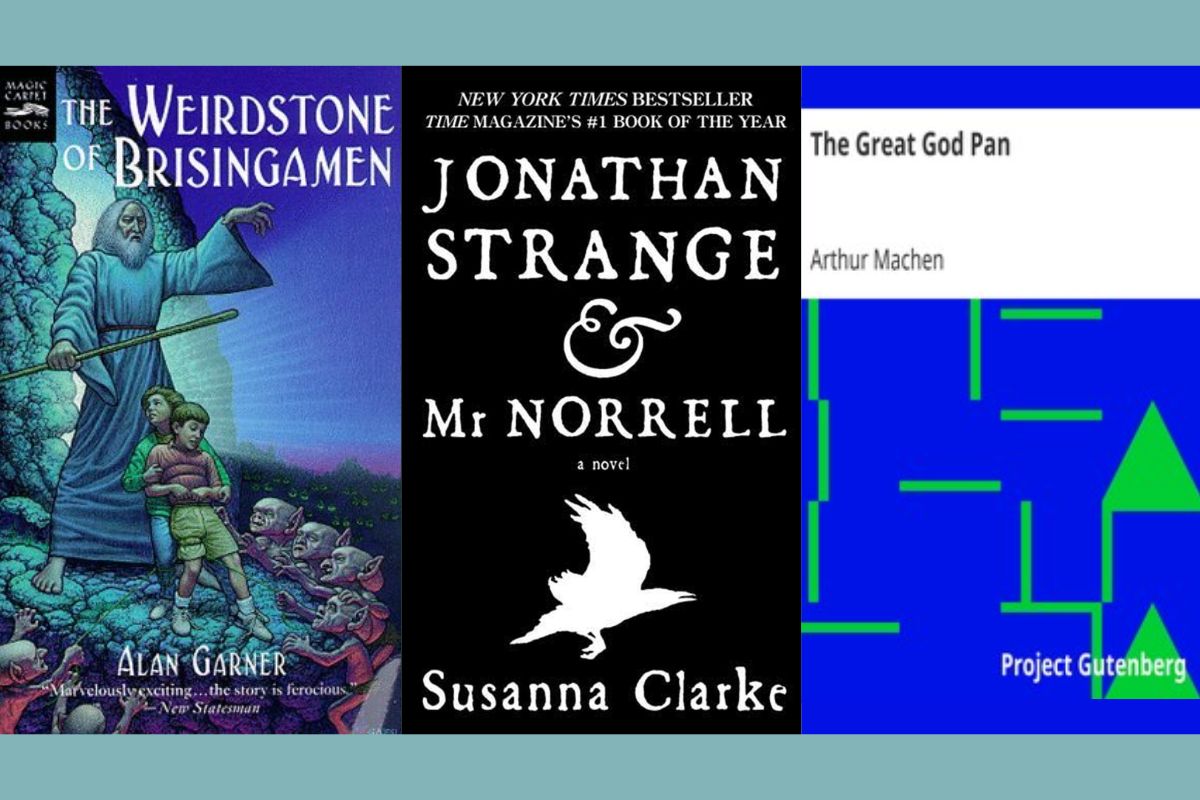
- The Weirdstone of Brisingamen by Alan Garner (1960): is about two children in a magical world. Two children blunder into an enchanted underworld beneath Alderley Edge, Cheshire. A witch, a wizard, and a world of legend await. It is short, vivid, and often creeps into your mind after you’ve closed the book.
- Mythago Wood by Robert Holdstock (1984): This tale drifts slowly into a forest where memories and myths take form. People from steel towns wander inside and meet figures from ancient tales. The forest seems alive. You feel the weight of centuries.
- Jonathan Strange & Mr Norrell by Susanna Clarke (2004): A very different book: set in early 19th-century England, polite society. Only there’s a crack under the polished drawing rooms. Magic is real, but cautious and rare. Then two men want more of it. You get footnotes and humour. A big, clever novel.
- The Great God Pan by Arthur Machen (1894): Not all British mythology fiction is safe for children. This one gives you a creeping horror when you step too close to the edge between worlds. Magic is there, but it can break your mind.
How The Writers Wove Myths Into Modern Life
Setting Feels Real
No invented kingdoms here. Cheshire, the Pennines, old English manors. When a door creaks in one of these homes, it could hide something old. Trees might remember. Stones might speak.
Time Folds Together
One moment, you’re reading about a Victorian gentleman in a morning coat. The next, magic hums in the air. Old myths and modern habits live alongside each other, and that makes the magic feel close.
People You Care About
These aren’t epic heroes from another world. Often, they’re children or academics or families with everyday worries. They walk off to fetch milk and to go to school. Then something extraordinary happens. That matters. You care.
Big Ideas Softly Told
Magic does more than twist spells. It asks questions. What happens when we forget what’s wild in the world? How do we treat inheritance and loss, as well as family and history? Myths carry lessons in a quiet way.
Which Book To Try First
If you’re not sure where to begin, start with Garner’s Weirdstone. It’s short, tight, and full of atmosphere. Its world opens around you without overwhelming. Once you feel the air, you might head next to Clarke’s Strange & Norrell. It’s long, but it’s full of voice, wit and surprise. Holdstock feels different again. It is slower, misty, and layered. And if you like a chill of horror, Machen is hard to beat.
To stay in the mood, you might pick up a folklore collection. Storyland by Amy Jeffs or a treasury of British folklore. They read like bedtime tales with a twist—easy to dip into, full of local colour and old wisdom.
Why People Still Love These Stories Today
- We want connection. Modern life can feel busy, pixel-bright, and quick. These charming tales remind us of quiet firesides, stories passed on. They help ground us.
- Nature still speaks. Whether forests are fantasy or real, these stories ask us to listen. Birds, trees, hills—they feel like characters. We begin to hear them ourselves.
- They don’t lecture. You finish a chapter with a thought, not a moral. And you carry that into your day—you might pause, breathe deeper, and notice dew on a leaf.
- They tie us to a place. A hill in Cumbria, a cottage in Herefordshire. These aren’t stage sets. They are maps you can visit. You wander Gordon Oak, Alderley Edge. Your footsteps near something old.
The Quiet Power Of These Tales
Sometimes I close a book and walk outside, and the world seems bigger. A morning fog hides something behind a tree. The air feels alive. That’s what British mythology fiction can offer: a moment where history, legend and today meet.
It matters less whether you believe in magic. What matters is what the moment leaves in you. A wonder. A question. A feeling that a legend is still finding its way.
So go ahead. Pick up a story. Let a legend soothe or surprise you. These are old stories speaking through new voices. They whisper: wait, look, feel. And they might just stay with you.