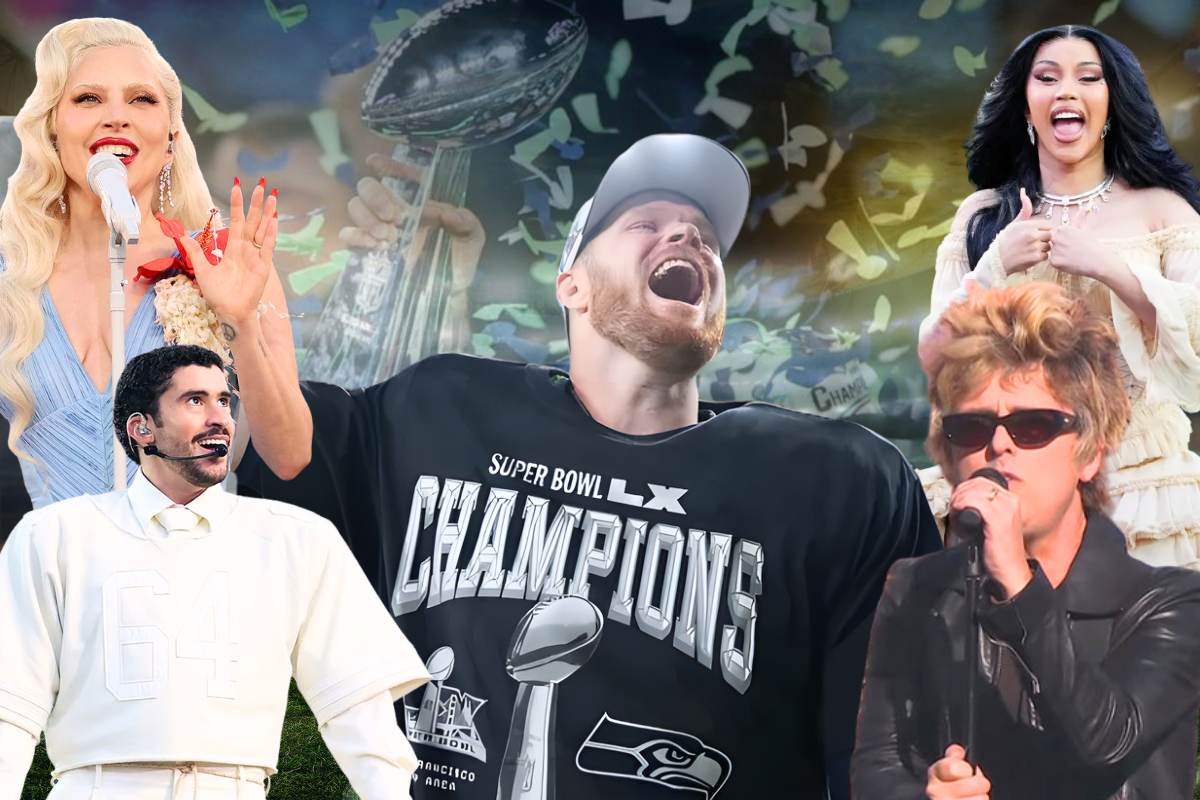
If you’d sat in a pub on Sunday night and tried to explain that a football game would end up being a debate about the definition of “America” and the ethics of machine-generated therapists, people might’ve told you to put down the pint. But here we are. Super Bowl LX wasn’t just a sporting event; it was a loud, messy, and colourful mirror held up to exactly where we stand in early 2026.
Why the Super Bowl of 2026 was less about touchdowns and more about worldviews is the question everyone’s asking. While the Seattle Seahawks were busy dismantling the New England Patriots with a 29-13 masterclass at Levi’s Stadium, the real action was happening in the gaps between the whistles.
We witnessed a halftime show, which felt like a political manifesto and adverts that were written by — and for — silicon chips rather than people. It’s obvious now where the “Big Game” has moved. It’s no longer simply about whoever can throw a ball the farthest. It’s a battleground for worldviews.
The Big Cultural Takeaways: Vibe Shifts and Machine Logic
Look, the game itself was almost secondary. The big takeaway from Super Bowl LX is that the “monoculture” is dead. We aren’t all watching the same thing for the same reasons anymore. For some, it was a celebration of a new, bilingual America. For others, it was a “woke” nightmare. And for the tech bros, it was the “AI Bowl,” a $10-million-per-30-seconds attempt to convince us that chatbots are our new best friends.
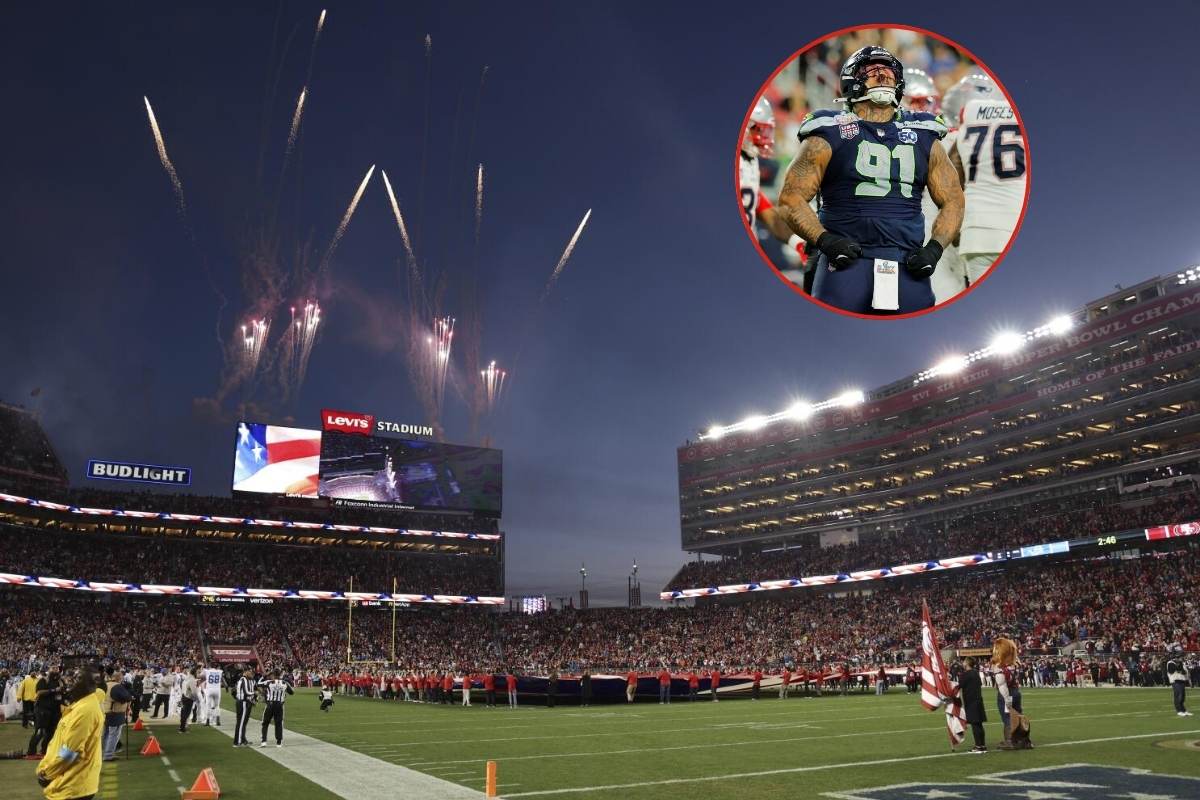
The crazy part is how much the “second screen” dominated. According to Strike Social, over 70% of viewers were on their phones during the game. They weren’t just checking stats; they were participating in a real-time cultural war. What happened in Santa Clara mattered less than what happened on TikTok and X. It shows that sports in 2026 are just the “seed capital” for the culture economy.
Also read: Savannah’s Nightmare: The $40 Million Fortune and the Ransom Call That Changed Everything
The Benito Bowl: A Latin Revolution in Santa Clara
The moment Bad Bunny—or Benito, as his fans call him—stepped onto that stage, the atmosphere shifted. The Bad Bunny Super Bowl performance wasn’t just a concert; he colonised the space with Puerto Rican pride. This wasn’t the usual “crossover” act where a global star sings three lines in English to keep the Midwest happy. This was raw, Spanish-language energy that refused to apologise for itself.
The set was a masterpiece of storytelling. He constructed a literal “casita” on the field — a facsimile of a Caribbean social club — featuring elders playing dominoes and vendors hawking piraguas (shaved ice). When Lady Gaga showed up for a salsa-soaked version of Die With a Smile, it felt like an actual cultural exchange. Then there was Ricky Martin belting out LO QUE LE PASÓ A HAWAii, a number that delivers a real punch to the gentrification of island life.
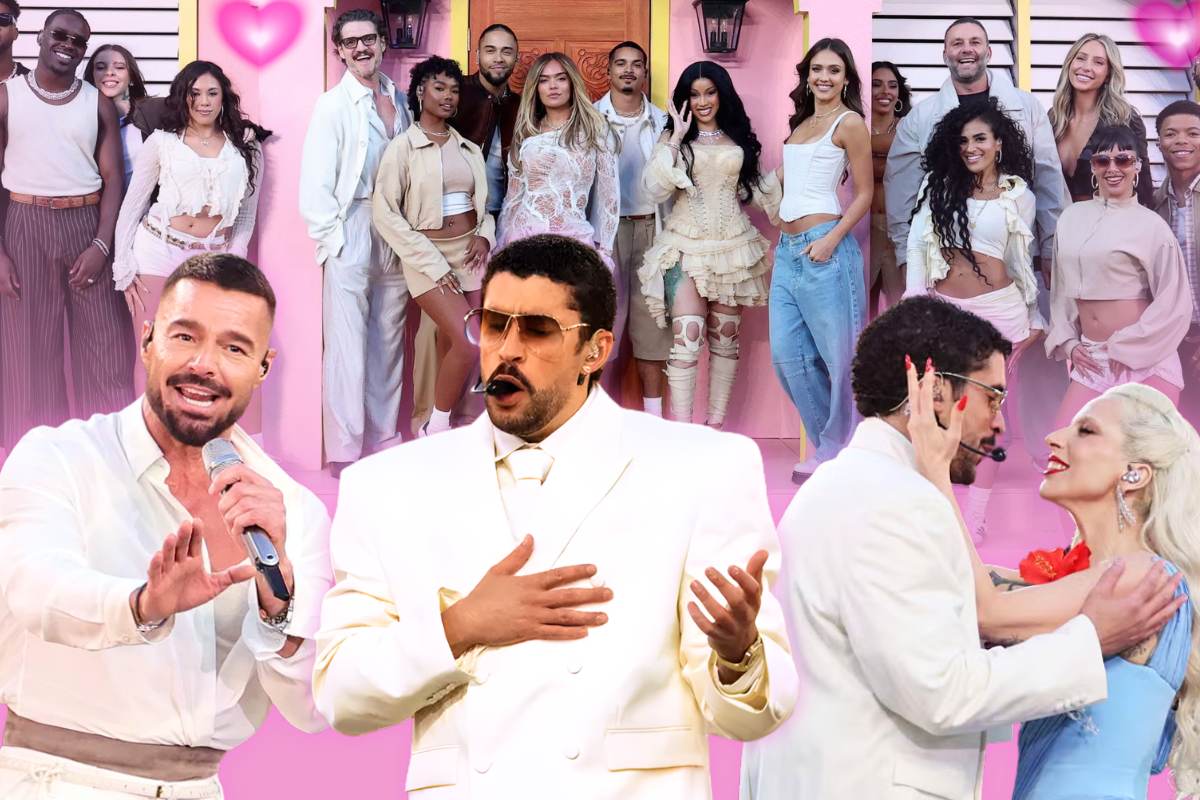
There were several high-profile Bad Bunny halftime show celebrity cameos that turned the field into a Hollywood-meets-San-Juan party. Beyond the musical duets, the Bad Bunny halftime show cameos included a “Fantastic Four” of stars dancing outside the casita, including Pedro Pascal, Cardi B, Karol G, and Jessica Alba, as well as appearances by Young Miko and social media star Alix Earle.
The symbolism wasn’t subtle. There was a massive billboard that flashed: “The only thing more powerful than hate is love.” It’s that kind of thing that makes some people cheer and some reach for their phones. To be honest, it was a bit of a “pinch me” moment to see a football stadium in California transformed into a San Juan street party. It revealed that the “American” audience is a lot more global than the old-school pundits would like to confess.
Also read: The Sour Truth: 10 Side Effects of Apple Cider Vinegar You Just Can’t Ignore
The Great Divide: Political & Ideological Reactions
You can’t talk about this year without mentioning the elephant in the room—or the Truth Social post, to be more precise. Within minutes of the final firework, Donald Trump dubbed the show “absolutely ridiculous” and a “slap in the face”. On the other side, Turning Point USA was busy streaming its own “All-American” show with Kid Rock to about 5 million viewers.
The TPUSA event wasn’t just a concert; it was a mission led by Erika Kirk, the widow of the late Charlie Kirk. Taking over as CEO after her husband’s assassination in 2025, Erika positioned this alternative show as a “pro-America” lane for families.
While she didn’t physically appear on the stage at the venue, her presence was felt through the tribute montages to Charlie that punctuated Kid Rock’s set.
For millions of viewers, she has become the face of a parallel cultural universe, one that views the official NFL spectacle as a foreign entity.
Green Day & The Pregame Tightrope: Why it Matters
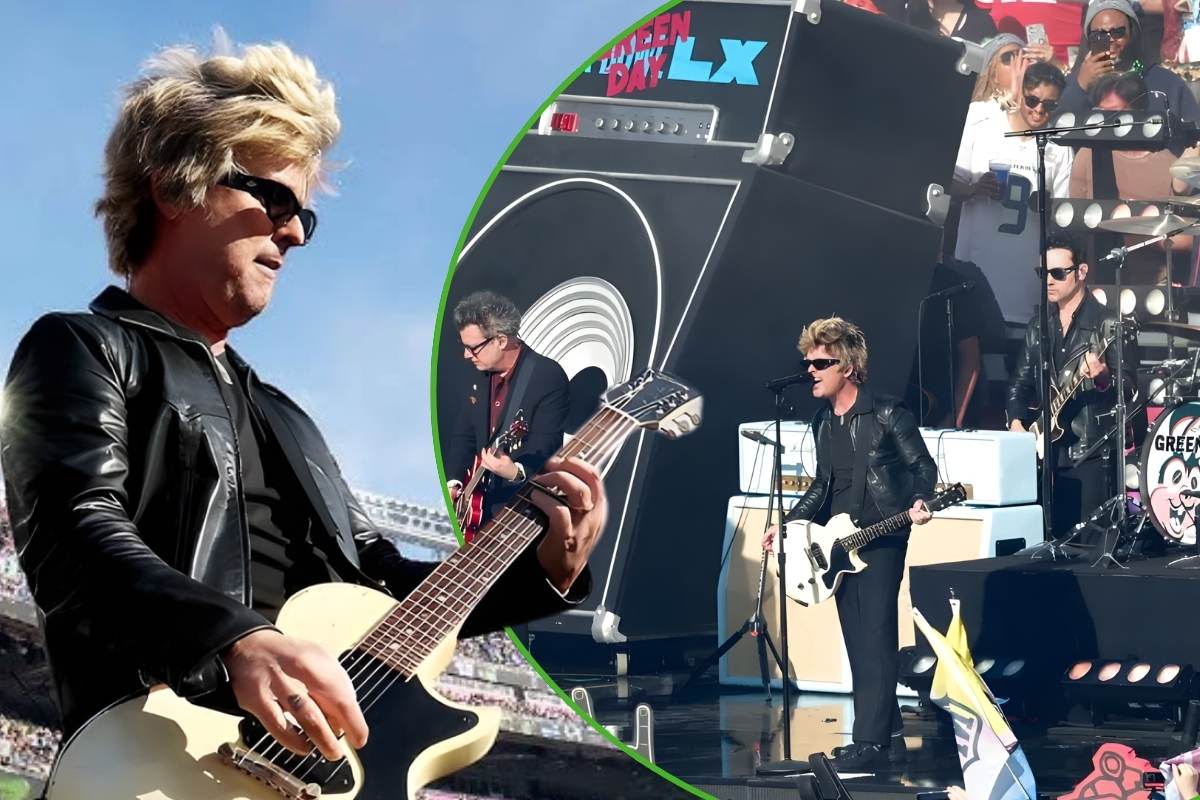
If Bad Bunny was the main course of cultural disruption, Green Day was the spicy appetiser. But here’s the thing: their actual performance at Levi’s Stadium was remarkably… polite. They opened with Good Riddance (Time of Your Life) alongside a live orchestra as the NFL paraded out 60 years of MVPs. It was nostalgic, polished, and oddly safe.
But that safety is exactly why it matters. Just 48 hours earlier, at a private show in San Francisco, Billie Joe Armstrong was screaming at ICE agents to “quit your shitty-ass job” and calling out the “Epstein Island” representatives.
When they hit the Super Bowl stage, they skipped the controversial bridge in Holiday and didn’t swap the “MAGA agenda” lyric in American Idiot.
The contrast was jarring. It showed us the “Corporate Punk” dilemma of 2026. The NFL wanted the edge of a protest band without the actual protest. It was a curated rebellion.
By playing it safe on the big stage after going wild on the “underground” one, Green Day highlighted the tension between personal brand and corporate platform. It proved that even the biggest rebels in 2026 have to calculate the cost of a bleeped-out microphone.
Also read: Why the Sheffield Wednesday Takeover Saga Could Take a Huge Twist in May
The AI Ad War: Fighting for Your Digital Soul
If the halftime show was the heart, the commercial breaks were the cold, calculating brain. We’ve entered the era of the “AI Bowl.” I reckon we’ll look back at this year as the moment the tech giants stopped being polite.
Anthropic and OpenAI went at it like heavyweights. Anthropic’s “Claude” ads were cheeky, mocking the idea of putting adverts inside a chatbot’s brain—a direct dig at ChatGPT’s latest moves. Then you had Google’s “New Home” spot for Gemini, which tried to make us feel all warm and fuzzy about AI helping us move house.
The crazy part? ai.com generated 9 times more engagement than the median ad, according to EDO. People are terrified and fascinated in equal measure.
The “Social Tail”: Why Memes Outran the Ad Slots
Here’s the thing about those $10 million ads—it’s a bit like fancy wallpaper. You see them, you say, “That’s nice,” and you return to looking at your phone. In 2026, the actual Super Bowl didn’t occur on a 70-inch 4K screen, but rather on the palm of your hand.
According to Meltwater, the halftime show drove a staggering 66% of the total engagement for the entire night. Think about that. Two teams played for three hours, but a 13-minute concert generated more than double the buzz. Why? Because it was built to be “screenshot-ready.”
Memes have officially become more valuable than traditional marketing. The “Canada” moment is the perfect example. Bad Bunny’s specific, slightly accented shoutout to Canada during his “God Bless America” sequence became a viral sound on TikTok within minutes.
By the end of the fourth quarter, there were thousands of remixes already. It wasn’t a scripted ad, but it somehow struck me as more real than any high-gloss corporate spot.
Also read: When Nails Became the Main Character at the 2026 Grammys
The Future of the Spectacle: What Comes Next?
What does all this tell us about where we’re going? What Super Bowl 2026 Says About Culture & Sports in 2026 is that the “product” isn’t the game anymore—it’s the conversation. We’re moving toward hyper-personalisation. And don’t be shocked if, come 2028, you’re deciding between three different halftime shows on your streaming device. One for the old school, one for the new wave and one for the tech-obsessed.
The 2026 game demonstrated that you can’t please everyone, and the organisers stopped trying. They doubled up on the controversy, for controversy drives clicks. It’s a bit dark, but that’s the state of our attention-span-depleted world.
Anyway, whatever you thought of the Spanish lyrics or AI jargon, you were talking about it. And that is precisely what the NFL wanted.
Also read: The Cotswold Helicopter and the Kardashian Case: A Look at Lewis Hamilton’s Love Life
FAQs: The 2026 Super Bowl Breakdown
How much did it cost to run an ad during the 2026 Super Bowl?
Ad slots cost between $8 million and $10 million for 30 seconds. The tech companies—particularly artificial intelligence firms like Anthropic and OpenAI—were the biggest spenders, doubling the tech spend on the “Crypto Bowl” from a few years ago.
Who were the surprise guests in Bad Bunny’s halftime show?
The show was star-studded. The primary musical guests were Lady Gaga and Ricky Martin, but the stage was joined by residents of “casita” — including Pedro Pascal, Cardi B., Karol G. and Jessica Alba.
What was the final score of Super Bowl 2026?
The Seattle Seahawks defeated the New England Patriots, 29-13. The Seahawks’ defence, nicknamed the “Dark Side,” was the standout story on the actual field.
What was the “All-American Halftime Show”?
In protest of the NFL’s selection of Bad Bunny, Turning Point USA hosted a rival stream featuring Kid Rock. It drew about 5.2 million viewers compared to the estimated 135 million who watched the official broadcast.
Sources & References
- Game Recap: Seahawks Dominate Patriots in Super Bowl LX Victory – CBS Sports
- Halftime Performance: Review: Bad Bunny’s Revolutionary Halftime Show – Associated Press
- Guest Appearances: Bad Bunny Brings Out Lady Gaga and Ricky Martin – FOX Sports
- TPUSA Event: Erika Kirk and the All-American Halftime Show Tribute – Taste of Country
- Ad Economics: NBCUniversal Sells Super Bowl LX Ads for $10 Million – SportsPro
- Green Day Pregame: Green Day Opens Super Bowl 60 at Levi’s Stadium – The Decaturian