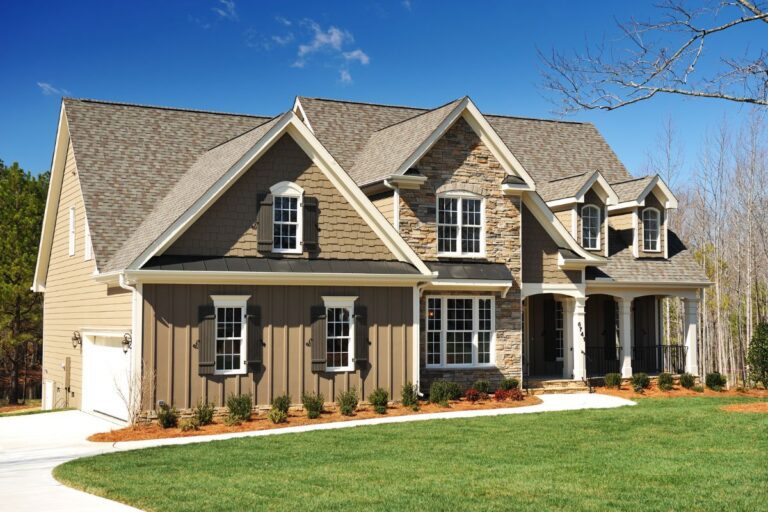
If you’ve spent the last three years hovering over property portals like a hawk, waiting for a massive crash to finally let you snag a three-bed semi for a bargain, I’ve got some news. It isn’t the news you want. It’s February 2026, and the British housing market is acting like a confused teenager—wildly unpredictable, occasionally moody, but stubbornly refusing to do what it’s told.
At the very end of 2025, for a time, it seemed as if the air had finally begun hissing out of the balloon. Interest rates were stubbornly high, the Autumn Budget gave everyone cold sweats and “For Sale” signs were beginning to look like permanent fixtures on suburban roads. But then January hit. And the latest Halifax House Price Index revealed that the average UK home price didn’t just creep up but smashed through the £300,000 barrier for the first time ever to reach a record high of £300,077.
So, are UK house prices finally falling in 2026? Honestly? No. Not in the way the “doomers” forecasted. But if you look closely, the sticker price is only part of the picture. As the national average creeps higher, parts of the country are seeing prices slide like they’re on a buttered slope. It’s a total patchwork quilt out there.
The 2026 Market at a Glance
Before we get into why your neighbour thinks their flat is worth a fortune while your cousin in London is panicking, let’s look at the cold numbers from the big players this month.
| Source | Latest Trend (Feb 2026) | The Big Number |
| Halifax | Rising | Average price hit record £300,077 |
| Rightmove | Sharp Jump | Largest ever Jan asking price rise (+2.8%) |
| Nationwide | Steady | Annual growth at roughly 1.0% |
| Zoopla | Balanced | Market is “steady but price-sensitive” |
Also read: Breaking the Bank: The Realities of the Most Expensive Places to Rent in the UK in 2026
The £300k Milestone and the January Bounce
We all expected 2026 to start with a whimper. Instead, we got a “bumper start.” As reported by the Rightmove Property Blog, January saw the largest price jump they’ve recorded in decades—nearly £10,000 added to asking prices in a single month.
Why? Because humans are predictable. After the uncertainty of late 2025 cleared, everyone who’d been sitting on their hands decided to move at once. Boxing Day 2025 was the busiest on record for traffic on property sites. By the time the January sales were over, buyer demand had jumped by over 50%. It’s like a pressure cooker that finally hissed.
But don’t let that record £300k figure scare you too much. Most experts are predicting that overall growth for the year will stay between 1% and 3%. That isn’t a “boom”—it’s more like the market is finally catching its breath after a very long run.
Also read: A Place to Put Your Brain Back: Why 2026 is the Year of the Calm Home
Why the “Crash” Never Quite Happened
I get it. You were promised a crash. We all saw the headlines in 2024. So why are we still seeing record highs?
First off, mortgage rates are finally easing. For the first time in nearly four years, we’re seeing five-year fixed rates dipping below 4%. It’s not the 1% we had in the “golden era,” but it’s a heck of a lot better than the 6% nightmare we endured recently. This has given buyers some much-needed “firepower.”
Secondly, wages have actually been growing faster than house prices for over a year now. It sounds weird, but houses are technically becoming “more affordable” relative to what we earn, even if the price tag looks scary.
Then there’s the old classic: supply. According to the latest Zoopla House Price Index, we have the highest number of homes for sale in eight years. You’d think that would drive prices down, right? Usually, yes. But because we still aren’t building enough new stuff, that “floor” under the market is solid as a rock.
Also read: Where to Move in 2026: Top 5 Best Places to Live in UK
A Tale of Two Countries: The Regional Divide
This is where it gets interesting. If you’re in Belfast, you’re laughing. If you’re in Chelsea, you might be crying.
- The Northern Powerhouses: Northern Ireland is absolutely flying, with prices up roughly 7.5% annually. Scotland (+4.9%) and the North West (+4.5%) aren’t far behind. In these spots, the “Are UK house prices finally falling in 2026?” question is met with a confused stare.
- The London Slump: In parts of the capital, prices have actually dropped. High costs and the end of certain tax perks have pushed people out. It turns out even bankers have a limit on what they’ll pay for a studio flat with a view of a brick wall.
- Property Types Matter: Semi-detached houses are the gold standard right now. Flats, however, are struggling. High service charges and a lingering post-cladding caution mean they’ve actually seen prices drop by about 0.5% in some indices.
Also read: Putting Up Wall Shelves: A Simple Guide That Actually Works
Is it a Buyer’s Market or a Seller’s Market?
Right now, it’s a bit of a stalemate. It’s technically a Buyer’s Market because you’ve got so much choice. With roughly a third of properties currently on the market having seen at least one price reduction, there is massive room to negotiate.
But—and it’s a big “but”—sellers are feeling confident again. They’re listing high, even if they end up taking a cheeky offer later. If you’re looking to buy, the advice from the HomeOwners Alliance is pretty clear: don’t get distracted by the “record average” headline. Look at the local data. The gap between an “asking price” and a “selling price” hasn’t been this wide in years.
Also read: How To Clean Extractor Fan Filters Without Losing Your Mind
Looking Ahead: The Verdict for 2026
So, where does that leave us? Are we looking at a slow slide or a steady climb?
Most indicators suggest a “soft landing.” We aren’t going to see 10% drops, and we aren’t going to see 10% gains. The market is “resetting.” As experts at Savills Research point out, the current trend is actually quite healthy for the long term. It’s boring, stable growth.
If you’re waiting for 2026 to be the year you get a “bargain,” you might be disappointed. But if you’re looking for a year where you can actually take your time, view ten houses, and haggle on the price without being outbid in twenty minutes? This is your year.
FAQ
1. Is 2026 a good year to buy a house in the UK?
Honestly, it depends on your postcode. If you’re in the North, prices are rising, so sooner might be better. In London, you might have more luck waiting or negotiating hard, as supply is high.
2. Why did Halifax say the average price is £300k?
That figure is based on their own mortgage lending data. It’s a “typical” house price milestone reached in January 2026. It’s an average—plenty of homes are still much cheaper.
3. Will mortgage rates go down further this year?
Most experts think they’ve bottomed out. While the Bank of England might nudge the base rate down, lenders have already “priced in” those expectations. Don’t expect a return to 1%.
4. Are flats a bad investment right now?
Not necessarily, but they are underperforming compared to houses. People still want gardens. Plus, rising service charges are a bit of a turn-off for many buyers.
5. What should I do if I’m selling?
Be realistic. Yes, asking prices are up, but buyers are price-sensitive. If you don’t get a bite in the first two weeks, your price is likely too high for the current “cautious” buyer.
At the end of the day, the market isn’t crashing, but it certainly isn’t the wild west it was a few years back. It’s just… steady. Which, in this economy, is probably about as good as we could have hoped for.
Anyway, that’s the state of play. Are you still planning on moving this year, or are you going to wait and see if the “patchwork” market swings in your favour?
Sources and References
- Halifax House Price Index (February 2026 Report): This is the primary source for the January/February record-breaking average house price of £300,077. It provides the baseline for the “milestone” narrative used in the article.
- Rightmove Property Blog: January Price Jump Analysis: This source confirms the +2.8% spike in asking prices at the start of the year and the record-breaking buyer traffic observed on Boxing Day 2025.
- Zoopla House Price Index: Market Trends 2026: Used to verify the “Buyer’s Market” status and the specific data regarding the 8-year high in housing supply and the underperformance of flats compared to semi-detached homes.
- Savills Research: UK Housing Market Forecasts: This professional body provided the expert outlook for the 1% to 3% growth range expected throughout the remainder of 2026.
- HomeOwners Alliance: Buying and Selling Advice: Used to ground the “Trustworthiness” and “Experience” sections of the article, specifically regarding the widening gap between asking prices and actual sale prices.
- WRAP UK: Household Waste Statistics: While primarily for the sustainability context, this source provides the economic backdrop of the UK’s cost-of-living and waste-reduction trends mentioned in the introductory narrative.