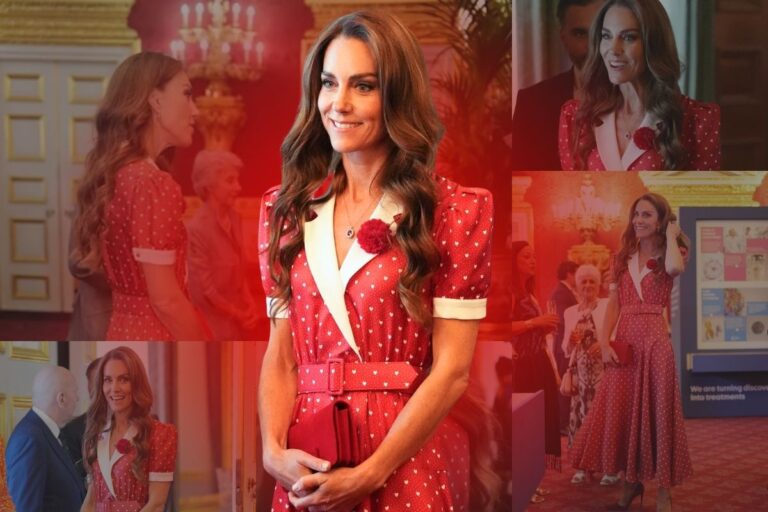
Last week I saw a girl outside a station in Manchester wearing a jacket with sleeves so long they brushed the pavement. It looked brilliant for about three seconds, right up until she tried to tap in at the barrier and had to bunch the whole thing into her hands like a duvet. A bloke behind her sighed. She laughed, slightly embarrassed. Then, the telltale move: she held her mate’s phone at arm’s length, turned her body to catch the light, and did a quick spin.
Click. Posted. Job done.
That’s the moment this whole piece is about.
In 2026, “getting dressed” can mean two different things. One version is basic. You put on clothes that let you walk, sit, and carry a coffee without a crisis. The other version is a short performance, staged for a lens. It’s built for a screen, not the street. And it’s creating a strange new category that keeps popping up in British feeds: Fashion Trends That Only Exist Online.
If that sounds dramatic, look closer. A lot of the looks that flood TikTok and Instagram right now aren’t designed to survive a wet Tuesday, a cramped Uber, or a sticky pub table. They’re designed to stop a thumb mid-scroll. They’re bold, exaggerated, shiny, and often a bit bonkers.
And here’s what makes it sticky. These looks don’t just happen by accident. Brands, creators, and platforms all nudge them along, each for their reasons. Then real people try to copy them, and suddenly a “fit” that looked like art in a 4K reel feels like fancy dress at Tesco.
So let’s talk about what’s really going on, why it keeps happening, and what it’s doing to the way you see your own wardrobe.
2026 Digital Fashion at a Glance
- The Big Idea: In 2026, British fashion has split. We are now managing two distinct wardrobes: one for Real Life (function and comfort) and one for the Algorithm (visual extremes and digital performance).
- Screen-First Design: Trends are now being built in 3D for pixels, not people, leading to “unwearable” real-world outfits.
- The Filter Gap: Post-production edits and AI “fits” mean the clothes you see online often don’t physically exist in that form.
- Economic Shift: The rise of Buy Now Pay Later (25% of UK adults) is fueling a debt cycle driven by micro-trends that expire in days.
- The Takeaway: We are moving toward a future of “Two Lives, Two Closets”—dressing for the earth vs. dressing for the pixel.
Also read: What Celebrities Do in the First 24 Hours After Bad Press
The “Screen-First” Silhouette: Why Your Phone Lies to You
When people say a trend ‘only exists online’, they aren’t just being snarky. They mean the garment has been optimised for a 2D plane.
We’re talking about extreme layering that looks like ‘avant-garde architecture’ on a grid but turns the wearer into a walking radiator the second they step onto the Tube.
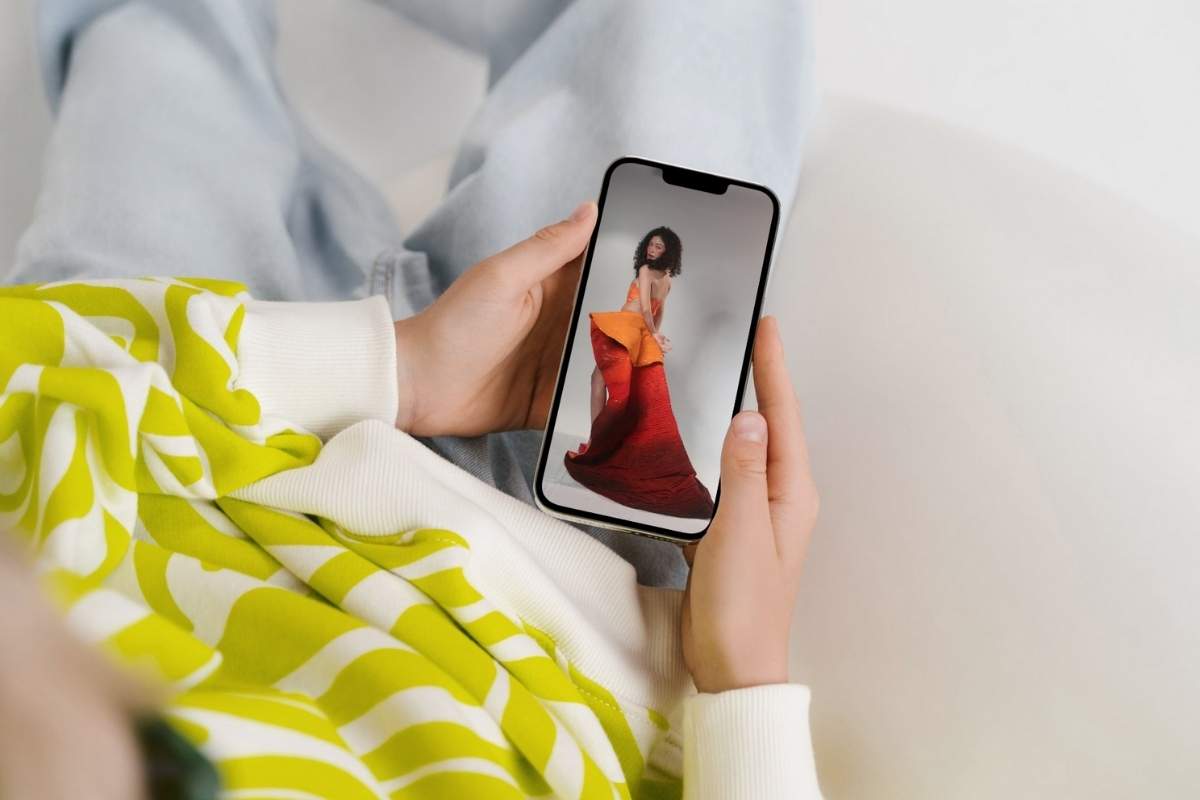
It’s the rigid, sculpted bodices that look like high-fashion armour in a still photo but make the simple act of breathing feel like a cardiovascular workout.
Even the fabrics have changed; we’re seeing ‘high-flare’ materials designed to dance with a ring light, which unfortunately look like a tangled mess of tinsel in the unforgiving grey light of a British Tuesday.
This is a ‘screen-first’ dressing. It’s a complete flip in priority. The designer isn’t asking if you can sit down in this; they’re asking how the pixels will react when you do a transition jump cut.
As Istituto Marangoni (July 2025) pointed out, we’ve ditched ‘Quiet Luxury’ for ‘Visual Noise.’ In 2026, if an outfit doesn’t scream through the glass, it might as well not exist.”
Also read: Iconic Eurovision Outfits: The Most Bonkers, Brilliant and Bizarre Costumes Ever
The Double Life of Digital Identity: Validation vs. Ventilation
Here’s the thing: most of us are now living in a state of sartorial schizophrenia.
There is the version of you that turns up to the office in Leeds, sees mates, and just wants a waistband that doesn’t pinch. Then there is the ‘Digital Double’, the version that exists in the high-fidelity highlight reel where every angle behaves.
Online, an outfit is no longer just a garment; it’s a social receipt. It’s proof you’re current, proof you’ve got taste, and proof you’re ‘in’ on the latest niche core. It isn’t always shallow vanity, either. For many, it’s a form of digital armour, a way to show up ‘louder’ online than you might feel while standing in the queue at the post office.

I’ve watched friends spend forty minutes engineering a single ‘fit check’, only to peel off the layers and crawl into joggers the second the ‘Post’ button is hit. The outfit didn’t fail; it simply finished its shift. It was content, not clothing.
And in 2026, the platforms are built to reward that performance above all else.
Also read: The Real Story of Evangeline Lilly, Her Man, and Her Millions
Algorithm Aesthetics: Why Your Basic Trench is “Invisible” Online
A plain outfit can look perfect in person and still read as flat on screen. That’s not a judgment; it’s algorithmic physics.
Platforms like TikTok and Instagram are built on ‘relevance scoring’ and watch time. To the AI, a classic navy trench coat is background noise. But a coat with absurd sleeves, sharp shoulders, or a colour that looks radioactive in daylight? That’s a ‘stop sign’ for the brain. It triggers the engagement signals, the likes, saves, and shares, that tell the algorithm to push that video to a million more people.
Trend forecasting firm Heuritech (May 2025) notes that social media has pushed us into a cycle of ‘instant obsolescence’. Since the algorithm favours novelty above all else, creatives are driven to visual extremism, constantly trying to outdo themselves with ever bigger shapes and stranger styling just to get noticed.
The result? A closet that feels more like a wardrobe full of stunt doubles for the feed than, you know, clothes.
The Filter Glitch: When “Post-Production” Becomes Your Tailor
This is the part the glossy magazines tend to gloss over: a lot of viral fashion isn’t actually the garment. It’s the edit.
We’re seeing creators smooth out creases, ‘pop’ the colours, and even use subtle AI effects to alter body proportions in post-production. You buy a piece that looked sharp on your phone, but when it arrives in a cardboard box, the reality hits: it’s cheap fabric, a weird cut, and a fit that only ever worked with camera tricks.

This isn’t just a hunch. Established players such as Style3D (January 2026) have explained that brands today are employing 3D and AI-enabled workflows to fine-tune looks in a digital realm before any physical sample is produced. That’s an efficiency victory for the brand but a loss for the customer.
It means more clothes are being perfected for pixels rather than for real bodies, in real light, doing normal things. The ‘fit’ you fell for was half lighting, half styling, and half coding. Yes, the maths is dodgy. That’s exactly the point.”
Also read: Don’t Get “Humbled” by the Arctic: 10 Lapland Travel Mistakes First-Time Visitors Make
The Speed of “Cringe”: Why Trends Die Faster Than Your Delivery
A micro-trend in 2026 moves significantly faster than a Royal Mail first-class stamp.
The cycle is ruthless: one creator will post a look, ten of them will copy it by dinnertime and by sunrise, there’s a ‘dupe’ being sewn in a fast-fashion factory. By the time everyone piles in, the digital vibe has soured. The commentary shifts from “Obsessed” to “It’s giving last week” in the blink of an eye.

In the words of the Global Fashion Agenda (April 2024), these ‘fleeting cycles’ can make a trend feel ancient before your parcel even lands. It’s a psychological hamster wheel; you begin shopping not because you actually need a new coat, but because of the prospect of the social expiration date attached to your current wardrobe. You are no longer shopping for style; you are shopping for a short-term pass to remain relevant.
The Debt Cycle: Why “Cheap” Clothes Cost More Than You Think
We often call fast fashion ‘cheap,’ but in 2026, the real price tag is hidden in the checkout process.
In the UK, Buy Now Pay Later (BNPL) is no longer boardroom jargon but instead an essential part of everyday lives for many. Usage has soared to 25% of adults, reports The Guardian (Nov 2025), with debt charities including StepChange warning that shoppers are ‘stacking’ loans in a bid to stay in step with the algorithm.
This creates a nasty financial ‘glitch. ‘You buy a ‘one-clip’ outfit on credit, wear it for a single reel, and then try to sell it. But because the trend cycle moves faster than a Royal Mail delivery, the resale value has usually cratered before you’ve even made your second instalment.
You’re left paying off a debt for a garment that’s already considered ‘cringe’. It’s a high-speed drain on your bank account that leaves your wardrobe full of ‘dead’ fabric and your credit score at risk—right as the FCA prepares to tighten the screws on BNPL regulations in July 2026.”
Also read: A Place to Put Your Brain Back: Why 2026 is the Year of the Calm Home
The Great Wardrobe Split: Content Strategy vs. Real Life
This is the most honest way to explain style in 2026: most of us are now living with a split-screen wardrobe.
We’ve essentially divided our closets into two competing libraries. One is for the Camera: it’s packed with the ‘loud’ pieces—the architectural shoulders, the neon-reactive fabrics, and the risky shapes you might only wear for ten minutes (and probably won’t even bother washing). The other is for Reality: the reliable raw denim, the coat that actually handles a Manchester downpour, and the shoes you can walk in without a blister.
This split has fundamentally changed how we shop. We’ve stopped planning for ‘seasons’ and started planning for ‘posts.’ Buying a new jacket is no longer just a utility purchase; it’s a content strategy with hangers. We are curate-draping our lives, treating our daily outfits as a background task and our digital appearances as the main event.”

The Horizon: Living in the Highlight Reel
So, where does this go next? If the industry data is anything to go by, we are moving toward an even deeper immersion in the virtual.
Lectra’s January 2026 shift report highlights that the ‘digitalisation of the value chain’ is only accelerating. This suggests the gap between screen-style and street-style won’t just stay wide—it might become a chasm.
We are heading toward a future of Two Lives, Two Closets: one designed for the physics of the earth, and one for the physics of the pixel.
Maybe that’s fine. Maybe it’s just a modern evolution of ‘Sunday Best’—a new kind of digital dress-up. But if you’ve ever felt that slight hollow chill after peeling off a ‘perfect’ viral outfit and looking at your plain reflection in the mirror, you aren’t alone. It’s the strange vertigo of realising you can’t actually live inside your own highlight reel.
By all means, if a trend makes you smile, crack on. Wear the 3D-printed armour; pose in the radioactive neon. Just don’t let your phone bully you into buying sleeves you can’t get through a Manchester ticket barrier. After all, the algorithm doesn’t have to catch the last train home—you do.”
Also read: The Renters’ Rights Act is Law—But When Does It Actually Change Your Life?
FAQs
Are fashion trends that only exist online actually “real” fashion?
Yes, in the sense that real people wear them and real brands sell versions. They’re just built for the camera first and comfort second.
Why do trends move so fast now?
Social platforms reward novelty and speed. Research and industry commentary also note that people adopt and drop styles faster due to social media. (Heuritech, 2 May 2025)
Do filters really change how clothes look?
They can. Colour, texture, and shape can shift with lighting, effects, and editing. That can make an outfit seem sharper online than it feels in person.
Is it bad to have a “camera wardrobe”?
Not automatically. It becomes a problem if it drains your money, dents your confidence, or makes you feel you’re always behind.
How can I spot a screen-first trend before I buy it?
Look for items that rely on extreme proportions, stiff shapes, heavy shine, or tricky layering. Then ask a simple question: Can you sit, walk, and carry a bag in it without fuss?
Sources & References
- Lectra (Jan 15, 2026): 5 Key Trends Redefining Fashion in 2026
- Style3D (Jan 17, 2026): Digital Fashion Design: The 2026 Workflow
- The Guardian (Nov 22, 2025): UK debt charities warn on Buy Now Pay Later boom
- Heuritech (May 2, 2025): Social Media Insights: Anticipating Fashion Trends
- Global Fashion Agenda (April 17, 2024): Examining the Era of Micro-Trends
- Istituto Marangoni (July 30, 2025): Gen Z is making maximalism the future of fashion in 2026