The Middle East is currently a powder keg, and Britain just tipped another 1,000 troops and a haul of high-tech hardware into the mix. But if you think this move is about going on the offensive, think again. While Defence Secretary John Healey was on the tarmac in Qatar this week, the message was clear: we’re here to hold the shield, not swing the sword. It’s a delicate, slightly sweaty balancing act being performed under the glare of a very unimpressed Donald Trump.
The US President hasn’t exactly been subtle. Over on Truth Social, he’s been firing off digital broadsides, basically telling the UK to “learn how to fight for yourself”. He’s even called the UK’s multi-billion-pound aircraft carriers “toys” compared to the American fleet. It’s the kind of blunt, public ribbing that makes diplomats wince and military brass grit their teeth. But while Trump is busy demanding a “decapitation” of the Iranian regime, Downing Street is digging its heels in.
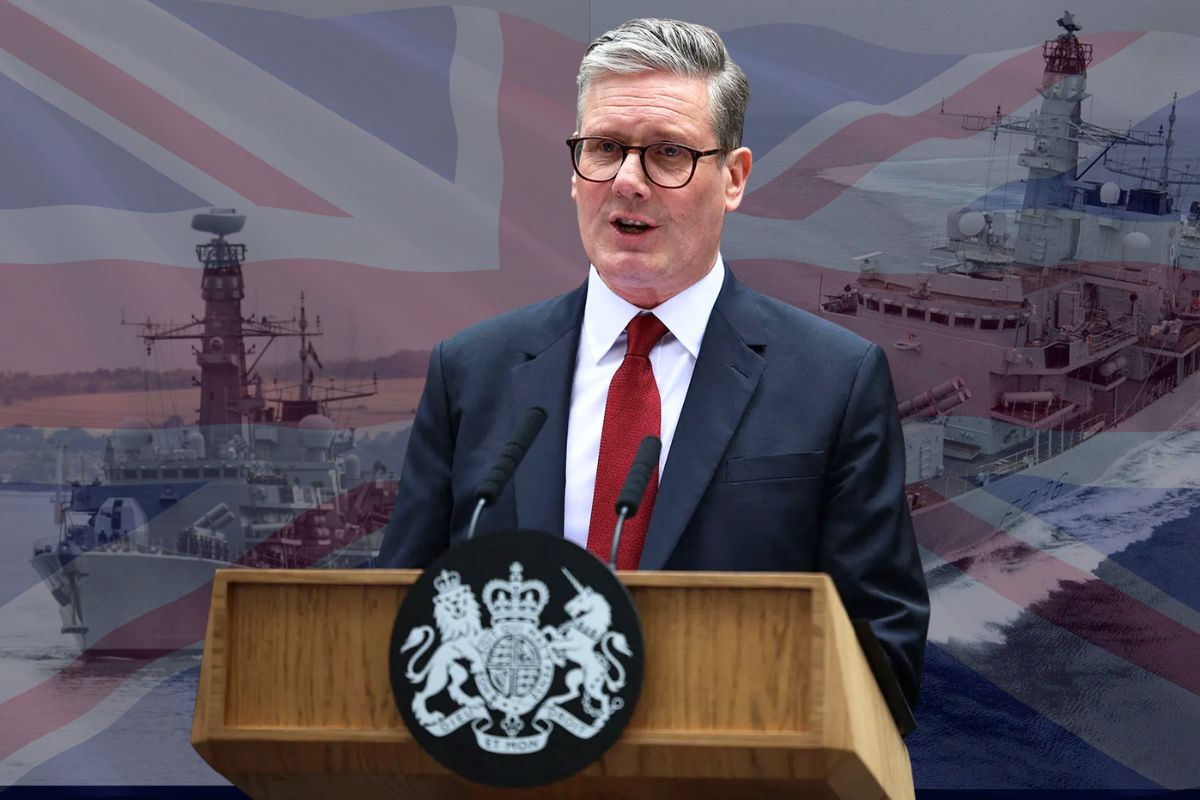
Sir Keir Starmer is playing a much longer, subtler game. He’s asserting that the UK won’t be pulled into a “wider war”, keeping his focus on what he calls the “national interest”. That doesn’t mean pouring in troops to make a full-scale invasion — rather, it means defending allies and keeping the shipping lanes open. It’s a “Britain’s Best” approach, as Healey described it, to guarding skies rather than overthrowing governments.
The New Shield in the Sand
So, what are we actually doing out there? It’s not just a few more boots on the ground. The Ministry of Defence is moving the Sky Sabre missile system and a specialist team from the Royal Artillery into Saudi Arabia this week. This thing is a beast—a mix of radars and launchers designed to swat drones and missiles out of the air before they hit anything important.
And it’s not just the Saudis getting a helping hand. The UK’s Lightweight Multirole Launchers have turned up in Bahrain, and the RAF’s “Orcus” counter-drone tech is now live in Kuwait. The goal is to spot those Iranian-made Shahed drones—the ones that have been causing such a headache—long before they become a threat.
The air presence is also ramping up. We’ve already got Typhoons and F-35s clocking over 1,200 flying hours in the region. Now, more jets are headed to Qatar. For the pilots, it’s a high-stakes game of cat and mouse. They’ve already been busy, with reports of RAF F-35s knocking out drones over Jordan and Iraq. It’s intense, precise work, and honestly, the pressure must be immense when you’ve got the world’s most powerful man calling your kit “toys” from across the Atlantic.
Between a Rock and a Very Loud Place
The real tension isn’t just in the Gulf; it’s in the phone calls between London and Washington. Trump is clearly fuming that Starmer didn’t immediately let US bombers use British bases for strikes on Iran. He feels we’re late to the party, turning up only after “the win” is already in sight. But from London’s perspective, the risk of a misstep is massive.
John Healey has been on a whirlwind 36-hour tour, meeting two kings and a handful of prime ministers, trying to build a coalition that doesn’t just rely on American muscle. The big worry for everyone—from the local emirs to the folks back home—is the Strait of Hormuz. Iran’s been playing a dangerous game of “selective blockade” there, and if that shipping route shuts down, we’re all going to feel it at the petrol pump and on our energy bills.
The United Kingdom is even proposing an international summit to discuss how to keep the Strait open. It’s a tactic familiar to British politics: get everyone into a room, talk it out, and keep the missiles on hold. It won’t quench Trump’s desire for a “decapitation” strike, but it is what the UK has elected to do.
At the moment, 1,000 British troops are now sitting in the crosshairs of a regional conflict that seems poised to boil over at any minute. They’re professionals, they’ve got the equipment, and they’re doing a job that’s as much about politics as it is about protection.
Whether it’s possible for this “defensive” posture to hold as the rhetoric from Washington continues escalating is anybody’s guess. But for now, the message from the MoD is clear: we’ll support our partners, but we’ll do it our way. Let’s just hope those “toys” are as tough as we need them to be, right?
Sources and References
- The Guardian (31 March 2026) – “UK sends more troops to Gulf amid Trump jibes over British military role” by Matthew Weaver. Detailed reporting on the 1,000-strong troop deployment and John Healey’s meetings in Qatar and Saudi Arabia.
- Ministry of Defence / GOV.UK (31 March 2026) – “Gulf air defences boosted further, as Defence Secretary visits Middle East.” Official statement confirming the deployment of Sky Sabre to Saudi Arabia and the extension of Typhoon jet missions.
- BBC News (21 March 2026) – “UK approves US use of British bases as Trump considers ‘winding down’ war in Iran.” Coverage of the diplomatic friction regarding the use of UK airbases for offensive strikes.
- AJ Bell / News Analysis (31 March 2026) – “Trump tells UK to secure Strait of Hormuz and ‘go get your own oil’.” Analysis of the economic impact on energy prices and Trump’s Truth Social commentary regarding the Royal Navy.
- Anadolu Agency (21 March 2026) – “Trump surprised by UK’s ‘very late response’ on allowing use of military bases.” Reporting on the timeline of UK-US military cooperation during the current 2026 Gulf crisis.