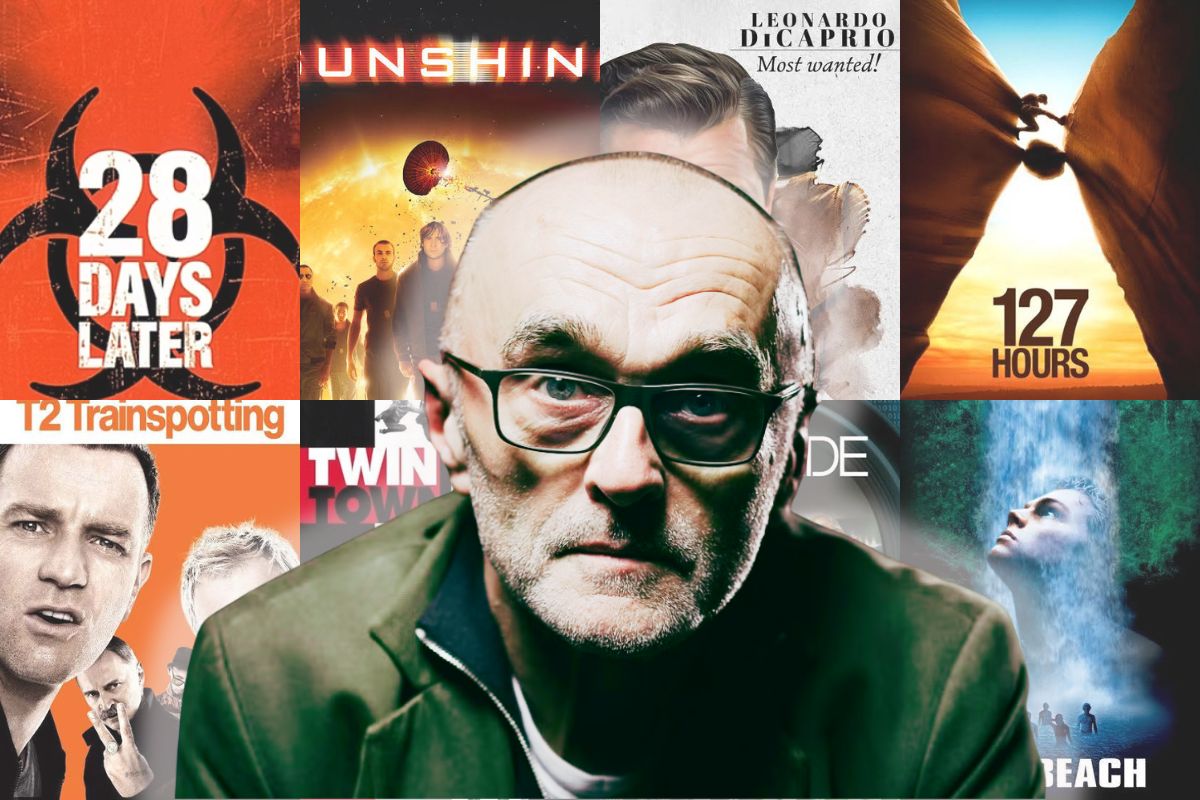
Have you watched this movie where a man runs through the streets of Edinburgh, breathing hard, adrenaline pumping, and you just know you are in for a ride? If you have, you have met Danny Boyle’s Trainspotting. That film is only one chapter in a story that began far from the bright lights of London and Hollywood. It is the tale of Daniel Francis Boyle, a filmmaker who rose from modest roots to become a name on nearly every serious film lover’s lips.
From Radcliffe to the Stage
Boyle was born in 1956 in Radcliffe, a town outside Manchester. His family had Irish roots and strong ties to the local church. At school, he was quiet but curious. He loved to read plays and sketch scenes for friends. He almost joined a seminary. Then he tried a youth theatre group. He found magic there. Watching actors bring words to life sparked something he could not ignore.
Theatre was Boyle’s training ground. He worked with the Joint Stock Theatre Company and later at London’s Royal Court Theatre. He saw how tension builds in a silent pause. He learned to guide actors to find truth in their roles. He felt the hum of a live audience, the way they shift in seats when a scene lands just right. All of this would shape his films.
Television’s Early Lessons
In the late 1980s, Boyle crossed from stage to screen. He joined the BBC as a director. He worked on shows such as Inspector Morse and Screenplay. It was a grind. Tight budgets. Short deadlines. Yet he thrived. He discovered how to tell a good story in a limited time. He learned to make every camera move count. If you can hold a viewer’s attention for fifty minutes on a small TV set, you can pull them into a two-hour film on the big screen.
Read Also: Solo Travel for First-Timers; How to Stay Safe and Inspired
A First Taste of Film Success
Then came Shallow Grave in 1994. A thriller about three flatmates who find a suitcase full of money and a dead body. Simple plot. Small budget. Yet Boyle’s style made it sparkle. Quick cuts. Unexpected laughs. A sense that anything could happen. It felt fresh. It felt alive. Critics took notice. Viewers lined up. The film won a BAFTA for Best British Film. Overnight, Boyle had clout.
Setting Off on an Iconic Ride
Do you remember that sense of shock when Trainspotting began? Renton racing down the road to “Lust for Life” felt like a jolt to the system. It was gritty, raw, and alive. Based on Irvine Welsh’s novel, the film followed a band of heroin users in Edinburgh. There were dark moments. There was comic relief. There was no preaching. Boyle let the story speak.
You may not have lived in Scotland in the 90s, but watching that film felt like you had. It captured a mood, a generation’s restlessness. It did not shy away from tough scenes. Yet it balanced them with sharp wit. Ewan McGregor’s performance made you care, even when you knew these characters were heading for danger.
Taking New Paths
A director can follow a big hit with a safe copy, but Boyle chose something different. He made A Life Less Ordinary, a love story with a twist. Reviews were mixed, but he learned from them. Next came The Beach, starring Leonardo DiCaprio. Some felt it missed the mark. Boyle did not retreat. He treated each project as a chance to grow.
In 2002, he shook up the horror world with 28 Days Later. No slow, shambling zombies here. These creatures ran. They struck terror with speed. Boyle filmed in empty streets, battering a sense of dread into every frame. The result was a film that revived horror. It proved he could take a tired genre and make it feel new.
Crossing Continents
Then Boyle did something few did: he went global without losing his voice. Slumdog Millionaire came out in 2008. You might ask, how does a British director tell a story set in the slums of Mumbai and make it ring true? Boyle did it by listening. He worked with local crews. He filmed where life happened, not on a closed set. Jamal Malik’s journey from poverty to game show star felt authentic because Boyle treated it with care.
Millions watched that film. It won eight Oscars, including Best Director for Boyle. Yet he remained the same man who once ran youth theatre workshops in Manchester. He kept championing new talent. He stayed curious about stories from all corners of the earth.
Finding Depth in Simple Tales
Boyle did not chase blockbuster glitz. In 2010, he made 127 Hours. One actor. One location. A man trapped in a canyon with his arm pinned by a boulder. The film could have felt claustrophobic, but Boyle found light in tight spaces. He used creative angles. He showed a man’s spirit under siege. Every moment felt tense. Every choice felt real.
Then came Steve Jobs in 2015. Boyle chose a structure that mirrored the man himself. Three scenes are set before product launches. It was dialogue-heavy. It was intimate. Michael Fassbender and Kate Winslet sparred in boardrooms and backstage, revealing the man behind the myth.
Read Also: My 5 to 9 Evening Routine That Help Me Survive
A Grand Stage for the Olympics
If you think films are Boyle’s only work, think again. In 2012, he directed the London Olympics opening ceremony. Picture this: a tribute to nurses and teachers, a sketch with British comedy legends, and a surprise helicopter stunt featuring the Queen. That ceremony didn’t just dazzle. It told a story of British resilience, creativity, and heart. It was a live show seen by billions. Boyle brought a film-like vision to a giant stage.
What Makes Boyle Stand Out?
You might wonder what ties all these projects together. Is there a secret formula? It starts with people. Boyle roots his films in character. He picks flawed souls, then shows how they rise or fall. He uses music to spark emotion. He embraces speed or stillness, whichever the story needs. He trusts local voices and global themes in equal measure.
He never settled on a single style. He jumped genres easily. One film might be a gritty drama, the next a horror shocker, then a tender human study. Yet each bears his signature: energy, empathy, and a bit of surprise.
Final Thoughts
Daniel Francis Boyle’s journey from Radcliffe to the global stage shows that a keen ear for stories and a brave heart can carry you far. He did not chase fame. He chased the truth. He did not chase standard images. He chased fresh ones. If you watch any of his films, you feel that pulse. You feel his roots in theatre. You feel his lessons from TV. You feel his drive to keep changing.
Have you watched Trainspotting or Slumdog Millionaire lately? Give them another look. Notice how Boyle lets characters breathe. Notice how he uses sound and movement. Notice how he invites you in, then surprises you.
That is how Daniel Francis Boyle became a notable UK filmmaker. Not by following a script. But by writing his own.