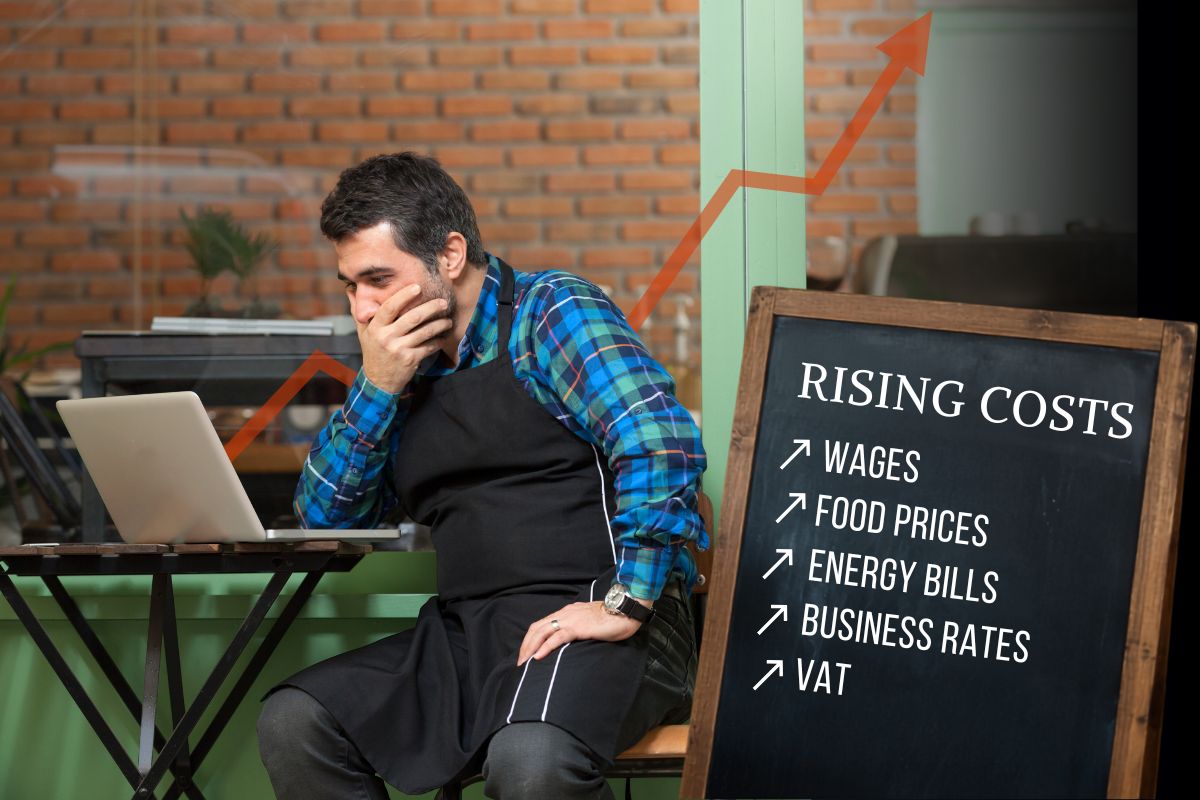
The hospitality industry cost surge UK operators face is caused by four things: higher wages, employer national insurance, a business rates change, and volatile energy prices.
Pubs, restaurants, hotels, and cafés are the hardest hit. Bills rose again on 1 April 2026, and trade data suggests the squeeze worsens, rather than eases, before 2029.
- The National Living Wage rose to £12.71 an hour in April 2026, adding £1.4bn to sector costs.
- The average pub’s rates bill climbs 76% by 2028/29; the average hotel’s climbs 115%.
- Nearly a quarter of firms are losing money; one in six fear they won’t last the year.
- A 10% VAT rate is the sector’s main ask. The Treasury is not sold.
Hospitality Industry Cost Surge UK: What’s Driving It
1. Wages and National Insurance
Labour is the highest cost, so wage policy hits hardest. The National Living Wage for over-21s climbed 4.1% to £12.71 on 1 April 2026. The 18–20 rate leapt 8.5% to £10.85. UK Hospitality puts the combined bill at an extra £1.4bn.
That is in addition to the employer National Insurance rise in April 2025. Opus LLP calculates this added about £2,500 per full-time worker.
Also read: How to Start and Run a Successful Business in the UK
2. Business Rates
April brought the biggest rate shift in years. The 40% retail, hospitality and leisure discount ended, and new multipliers and a revaluation based on 2024 rents replaced it.
The average pub pays 15% more this year, an extra £1,400. The average hotel pays £28,900 more. Over three years, the increase amounts to £12,900 for a pub and £205,200 for a hotel. Pubs and live music venues won a further 15% discount in January 2026. Hotels, restaurants and cafés received no support whatsoever.
Also read: British Business and the AI Shift: What is Actually Happening in 2026?
3. Energy and the Middle East
Energy never came back down after Russia invaded Ukraine. It sits roughly 70% above 2022 levels. Disruption in the Strait of Hormuz has pushed wholesale prices up again. The Ofgem cap protects households, not businesses, so firms on fixed contracts feel it at once.
Grid charging is changing for larger users too, and that cost could double within a year.
4. Food and Supply Costs
Research by payments provider Dojo, reported in The Drinks Business, found small businesses’ running costs have outpaced consumer inflation by 11.75% over a decade. Catering firms saw materials and supplies rise 113%. Pubs and bars saw technology costs jump 167%.
Also read: Market Shift: Decoding the Tesla UK Sales Slump
Who is Feeling It Hardest?
- Pubs: Rates and duty bite, though January’s relief softens the blow.
- Hotels: The steepest rates rise of all, with no discount to lean on.
- Restaurants: Thin margins, heavy energy use, no protection.
- Cafés and caterers: Caterers also carry transport costs, up 57% in ten years.
London shows the strain. The Standard reports hospitality employs over 250,000 people in the capital, yet full rooms rarely mean profit.
Michelin-starred Pied à Terre saw its rates bill rise from £43,120 to £56,572, even after relief. Tube strikes hurt too: Access Hospitality found bookings fell by up to 67% during last September’s stoppages.
Also read: Why Your Local Costa Coffee Might Be Gone Next Week Without Warning
How Fragile is the Sector?
Opus reports total assets down 18% to £45.5bn and net worth down 26% to £12.4bn since September 2023. More than half of hospitality businesses now sit at serious risk of failure. Only construction produces more insolvencies.
Survey work by CGA and NIQ, shared with The Guardian, told the same story. One in five operators feared collapse within a year, while trade bodies warned that failures would continue unless the cost burden was “dramatically reduced”.
How Businesses are Adapting
Most have already cut what they can:
- Trimming opening hours and shift patterns.
- Hiring fewer young and part-time staff.
- Raising selected menu prices rather than everything.
- Renegotiating supplier contracts and cutting waste.
- Closing unprofitable sites, if the group is big enough.
The edge now lies in control and efficiency. Independents have the least room to move.
Also read: High Net Worth Individuals in the UK Face New Challenges
What It Means for Customers
Expect higher prices, shorter hours and fewer choices. Some venues will drop lunch; others will shut midweek. Pints, plates and rooms cost more because serving them is more expensive.
The VAT Fight and What Happens Next
The sector’s big ask is a VAT cut from 20% to 10%, matching the rates in France, Spain and Italy. Germany charges 7%; Ireland has moved to 9% for food businesses. Chef Tom Kerridge fronts the #VATsTheProblem campaign, which passed 250,000 signatures in July 2026.
Not everyone agrees. HMRC estimates the cut would cost £10.5bn. Tax Policy Associates puts it nearer £12bn and warns big chains would pocket much of it, with McDonald’s alone retaining an extra £432m. Rate reform, critics say, is better value.
Also read: How to Spot Equity Release Companies to Avoid
Conclusion
Costs are not easing. Rates will rise again in 2027 and 2028, and wages will rise next April. Without a VAT cut or deeper rates reform, more closures look likely. The sector is not short of customers. It is short of margin.
FAQs
Why are hospitality costs rising in the UK?
Ans: Wages, National Insurance, business rates and energy have all risen together. April 2026 brought a new rates system and a higher minimum wage. Food costs are also climbing.
What is the biggest expense for hospitality businesses?
Ans: Labour. Staff costs swallow close to half of what most operators spend. Energy and business rates come next, and both have risen sharply since 2022.
Will restaurant prices increase further?
Ans: Very likely. Operators have cut costs as far as they can, so pricing is the last lever. Expect selective menu rises rather than widespread hikes.
How are hotels dealing with higher costs?
Ans: Hotels face the steepest rate rise and no extra discount. Many are lifting room rates, cutting staffed hours and reviewing energy contracts.
Will the cost surge affect tourism?
Ans: Yes, indirectly. Higher room rates and fewer venues make the UK a pricier destination. Domestic visitors may trim trips as their bills rise.
What can businesses do to reduce costs?
Ans: Review supplier contracts, track cost per item, cut waste and check your rateable value for errors. Challenging a wrong valuation can save thousands.
Sources & References
- The Guardian – One in five operators feared collapse within a year.
- The Drinks Business – Small business running costs have outpaced consumer inflation by 11.75% over a decade
- Opus LLP – The national insurance rise in April 2025 was about £2,500 per full-time worker.
- The Standard – Hospitality employs over 250,000 people in the capital, but full rooms rarely mean profit.